Are Mail-In Gold Buying Kits Safe?

There is always a risk when when you mail your valuables. Ask yourself, “is it worth the risk”?
Mail-in gold kits are risky because you ship your items first and the buyer sets the payout afterward. A 2010 newspaper report said a growing number of consumers who mailed Rolexes or class rings got pennies on the dollar. The risk falls on Southern California sellers of gold, silver, coins and inherited jewelry.
Who sets the price when your gold is already in the mail?
A mail-in sale follows a fixed order. You pack your items and ship them, and only then does the buyer inspect, weigh and name a price. By that point the jewelry is out of your hands, and so is your say in the number.
An ABC News test shows how this plays out. Reporters testing a mail-in gold company received a $206 check, and the company later raised its offer to $275. That is a $69 difference, about a third more than the first check, and it shows that a mail-in payout is a number the buyer chooses. Once the package was gone, the seller had little leverage to question it.
We understand the appeal. A kit looks convenient, especially when you are sorting through a parent’s jewelry box and want the task off your plate. If the pieces are heirlooms, the decision often involves siblings and memories as well as money, and that deserves an unhurried conversation, not a shipping box. Wanting an easy process is reasonable. It just shouldn’t cost you control of the price.
What if the package is lost or stolen in transit?
A kit adds a second risk that has nothing to do with price: the trip itself. Packages can be lost or stolen on the way to the buyer, and a mail-in sale leaves you relying on a carrier and a stranger’s warehouse to get your jewelry there safely.
Anyone who ships valuables should take a few precautions:
- Photograph each piece and write down a description before you pack it, so you have a record if a dispute arises.
- Insure the package for its full value.
- Use a delivery method with proof of delivery, and keep the tracking number and receipt.
Insurance can cover a lost box, but it cannot tell you whether the number on the check is fair. Bringing your items to a local store removes the shipping step altogether, so there is nothing to insure, track or wait on.
How to spot gold buyer scams
The U.S. Commodity Futures Trading Commission (CFTC) lists warning signs that make a practical filter for gold buyer scams:
- Do not respond to unsolicited email, mail, cold calls, advertisements, videos or social media posts about precious metals.
- Compare costs and insist on getting all fees in writing.
- Check with the attorney general in the dealer’s home state to see whether the dealer has a history of complaints.
The first sign describes a kit that shows up in your mailbox unrequested. The third has a wrinkle for mail-in sales: the dealer’s home state may be far from California, so the attorney general to contact may not be in this state.
How to avoid gold scams: a face-to-face appraisal checklist
Take this list to any buyer, including us:
- Watch the weighing and testing. Ask to see it done in front of you, not in a back room or a distant warehouse.
- Ask how the price is calculated. Have the buyer explain the number, not just state it.
- Get more than one offer. Compare them side by side before deciding.
- Ask who you are dealing with. Find out what credentials they hold. California Gold & Silver Exchange lists BBB, GIA, NGC and PCGS among its certifications.
Paperwork is worth a question too. California Business and Professions Code section 21638 addresses holding, reporting or identification requirements for transactions involving coins, monetized bullion, or commercial grade ingots of gold, silver or other precious metals. Ask any buyer to explain which forms apply to your sale and why. A trustworthy buyer will answer plainly.
As a family-owned business, we pride ourselves on paying more than other places. That is our own stance, not a research finding. We would rather earn your sale honestly than win it with pressure, and you can say no and walk away.
Test gold at home? Why a home test is only a first step
Many people want to test gold at home before they sell, and that is a sensible instinct. A home test can give you a rough first impression of what you have. It cannot replace a professional evaluation of metal content, gemstones or collectible coins.
That matters most with heirlooms and coins. Some pieces carry value beyond their metal, such as craftsmanship, a gemstone or collector interest, and a quick home check won’t reveal it. An expert look before any sale helps you understand what you are holding.
Treat a home test as the start of your questions, not the end of them. If you do test at home, write down what you did and saw, and bring those notes with the piece. Make your decision once you have the full picture, and take as long as you need.
Visit California Gold & Silver Exchange for a free, no-obligation appraisal
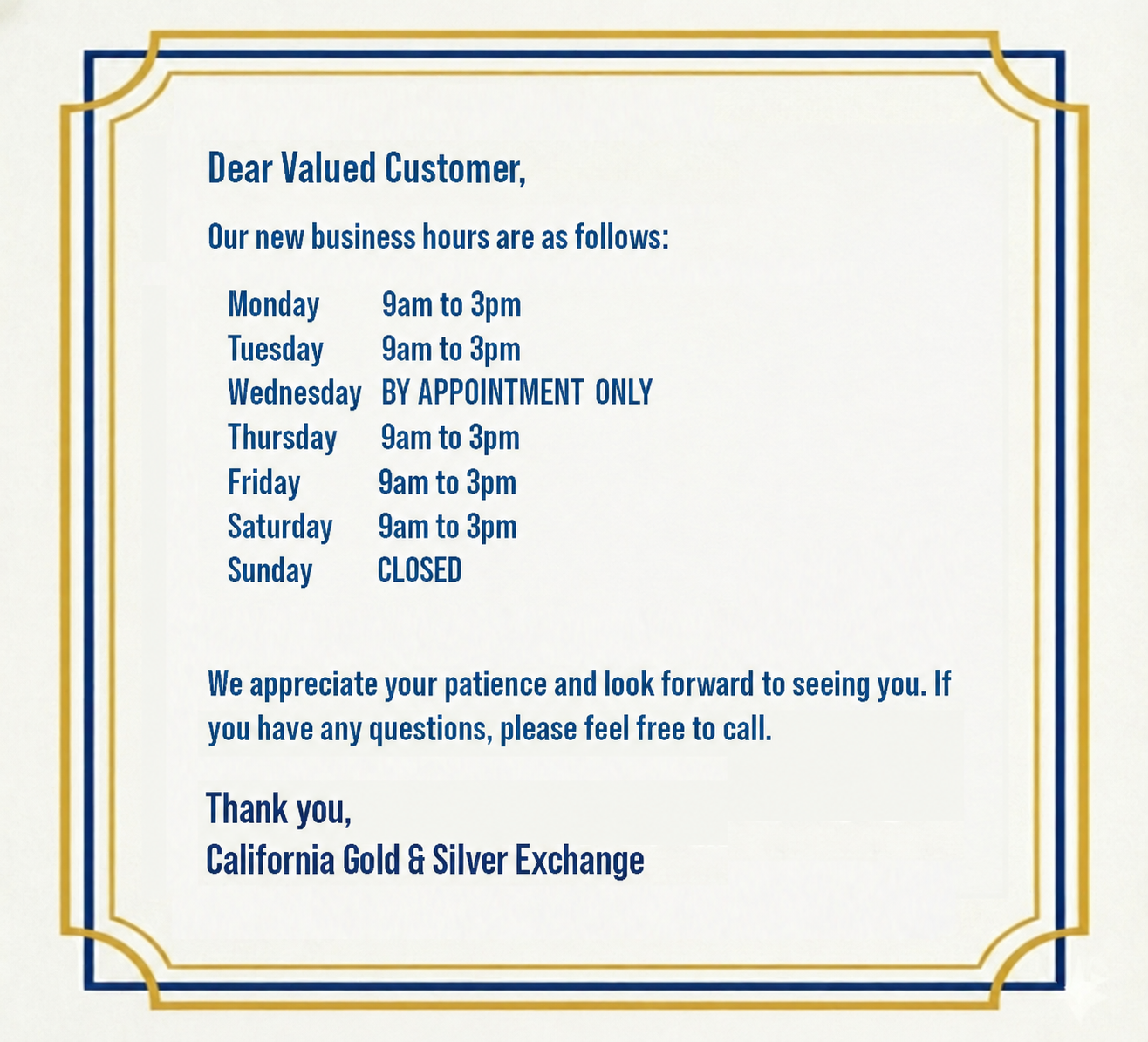
Bring your jewelry, coins or bullion to our Upland store for a free, no-obligation appraisal. Our family-owned team brings more than 50 years of combined expertise to every appraisal, and we are glad to talk through your pieces one at a time. Bring any receipts or paperwork that came with a piece, along with your questions. The appraisal costs nothing, and you are free to take the number home and think it over.
Savers and collectors weighing wealth preservation or inflation protection can also ask us about IRA-approved metals, with no promises about profit. Whatever brings you in, we want you to feel like part of the family.