GOOD NEWS! The Silver Market Is Moving Again: We’re Buying Sterling Silver and All Silver Items
Earlier this year, unusual conditions in the precious-metals market created significant pressure on parts of the silver-refining and buying supply chain. Strong demand, elevated silver prices, increased recycling activity, and limited processing capacity contributed to refinery bottlenecks that affected how quickly some dealers could move certain types of silver. The Silver Institute has also reported refinery bottlenecks associated with increased silver recycling and a tight physical market.
For some sellers, that meant discovering that a dealer was temporarily limiting or declining certain silver items.
That situation has changed at California Gold & Silver Exchange. We are once again buying sterling silver jewelry and qualifying silver items.
If you put your silver aside because you previously could not find a buyer, you can now bring it in for evaluation.
What Happened to the Silver Market Earlier This Year?
The earlier disruption did not mean that silver suddenly lost its value. The issue was largely about the movement and processing of physical metal.
California Gold & Silver Exchange previously reported that silver refineries were experiencing delays as elevated prices increased the amount of silver entering the refining system. Their February 2026 report described a surge of jewelry, flatware, coins, and other scrap entering the market while refiners faced processing constraints.
Independent industry research supports the broader picture. The Silver Institute reported that silver recycling reached its highest level in 12 years in 2025, while refinery bottlenecks limited some recycling volumes. It also expects the global silver market to remain in structural deficit during 2026.
Why Can a Silver Buyer Temporarily Stop Buying Certain Items?
There is an important distinction between silver having no value and a buyer temporarily being unable or unwilling to process a particular type of silver.
When refiners and dealers are dealing with limited processing capacity, longer settlement times, changing inventory requirements, or tighter liquidity, they may become more selective about what they purchase.
That can affect lower-volume, mixed, or lower-purity material even when the underlying silver still has value.
In other words, a temporary buying restriction does not necessarily tell you anything about the intrinsic value of your silver. It may simply reflect what a particular buyer can efficiently process at that moment.
The Good News: We’re Buying Sterling Silver Again
If you have been holding onto sterling silver because you could not find a buyer, California Gold & Silver Exchange is once again buying qualifying silver items.
Our current buying categories include sterling silver jewelry, sterling silverware, silver coins, silver rounds, silver bullion, foreign silver coins, and other qualifying silver items.
We Buy Sterling Silver Jewelry
Sterling silver does not have to be new or in perfect condition to contain valuable silver.
We buy qualifying sterling silver jewelry, including:
- Rings
- Earrings
- Necklaces
- Bracelets
- Pendants
- Vintage jewelry
- Antique jewelry
- Broken jewelry
- Damaged jewelry
- Mismatched jewelry
- Unwanted jewelry
A broken chain or single earring may no longer be useful to you, but that does not necessarily mean the silver has no value.
The important question is what the item is made of and how much qualifying precious metal it contains.
We Buy Sterling Silverware and Serving Pieces
Sterling silver flatware and serving pieces are another category that can sit unused for years, particularly when they have been inherited.
If you have sterling silverware or serving pieces you no longer want, bring them in for evaluation.
Examples include:
- Forks
- Spoons
- Knives
- Serving utensils
- Trays
- Tea sets
- Candlesticks
- Salt and pepper shakers
- Sterling serving pieces
California Gold & Silver Exchange specifically lists sterling silverware, tea sets, knives, spoons, forks, sterling platters, candlesticks, and sterling medallions among the silver items it purchases.
We Buy Other Silver Items
Our silver buying also includes qualifying:
- Silver coins
- Silver rounds
- Silver bullion
- Silver bars
- Silver medallions
- Foreign silver coins
- Other qualifying silver items
The type, purity, weight, and composition of an item all matter when determining its value.
How Do You Know If Something Is Sterling Silver?
One of the most common questions sellers have is whether an item is actually silver.
You do not need to be an expert to bring your items in for evaluation, but understanding common markings can help.
What Does .925 Mean?
Sterling silver is generally 92.5% pure silver.
That is why sterling silver jewelry and other items are commonly stamped “.925”. The remaining portion consists primarily of other metals used to create a stronger, more durable alloy.
You may also see “STERLING” or other sterling markings.
What About “German Silver,” “Alpaca,” or “Nickel Silver”?
Names can be misleading.
Materials sold as “German silver,” “Alpaca,” or “nickel silver” are not the same thing as sterling silver and generally do not contain silver simply because the word “silver” appears in the name.
Do not assume a piece is sterling based solely on its name.
What If There Is No Silver Mark?
Do not automatically assume an unmarked item is worthless.
Some items require additional testing to determine what metal they contain. California Gold & Silver Exchange evaluates and tests precious-metal items as part of the buying process.
If you cannot find a .925 or sterling marking, bringing the item in for evaluation is often more useful than trying to identify it yourself.
What If Your Silver Is Old, Broken, Damaged, or Unwanted?
Silver does not have to look perfect to have value.
California Gold & Silver Exchange states that it buys gold and silver jewelry in a variety of conditions, including broken, damaged, vintage, antique, mismatched, and single items.
That can include:
- Broken chains
- Single earrings
- Damaged rings
- Tarnished silver
- Inherited silver
- Jewelry you no longer wear
- Mismatched pieces
- Old silverware
- Silver that has been sitting unused for years
You do not need to repair, polish, match, or restore your silver before bringing it in.
In many cases, the precious-metal content matters more than whether the item is currently useful or attractive to you.
How California Gold & Silver Exchange Evaluates Your Silver
Selling precious metals should be straightforward. You should understand what you have and how an offer is determined before deciding whether to sell.
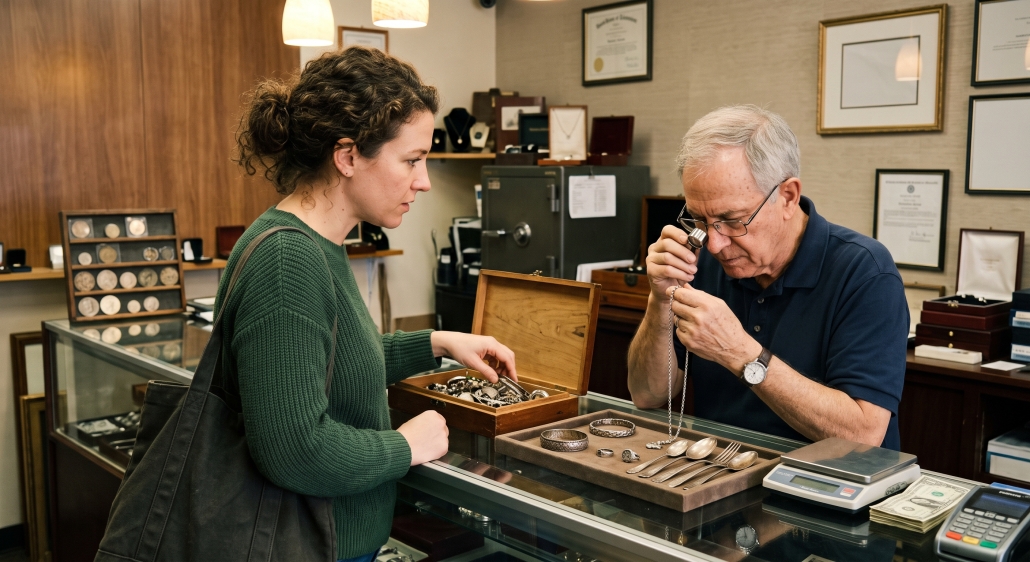
California Gold & Silver Exchange describes its process in three basic steps:
- Bring your items in.
- The items are evaluated, weighed, and tested as appropriate.
- You receive an offer and decide whether you want to sell.
The company states that customers can see their items weighed and tested and receive a free estimate with no obligation to sell.
What Determines the Value of Silver?
There is no single price for every silver item.
The value can depend on:
- Purity
- Weight
- Current silver market conditions
- Type of item
- Authenticity
- Collectibility
- Condition
- Actual silver content
For ordinary sterling silver jewelry or flatware, the precious-metal content is often an important part of the valuation. A collectible coin, rare piece, or historically significant item may involve additional considerations.
That is why an in-person evaluation can be more useful than estimating an item’s value based solely on its appearance or a single marking.
What This Means If You’ve Been Waiting to Sell Your Silver
If you previously tried to sell silver and were told that a dealer was not buying certain materials, that does not necessarily mean you need to keep waiting.
California Gold & Silver Exchange is currently buying qualifying silver items again.
That may be relevant if you have:
- Sterling silver you inherited
- A collection you have been meaning to evaluate
- Silver jewelry you no longer wear
- Sterling silverware sitting unused
- Broken or mismatched silver jewelry
- Silver coins or bullion
- Items you previously could not find a buyer for
You also do not need to determine the value of everything yourself before bringing it in.
Not Every Silver Item Is Worth the Same
A stronger silver market does not mean every object containing silver has the same value.
Two items can look nearly identical and have substantially different values because their purity, weight, composition, or other characteristics differ.
For example, sterling silver is generally 92.5% silver, while silver-plated material has only a surface layer of silver over another material. “Nickel silver” and similar materials may contain no silver at all.
That is why identification and testing matter.
A professional evaluation can help distinguish between materials that may look similar but have very different precious-metal values.
Why Sell Silver to a Local Buyer?
Selling locally gives you the opportunity to bring your items in yourself, have them evaluated in person, and discuss the transaction directly with the buyer.
You Do Not Have to Ship Your Silver
A local transaction means you can bring your items to the buyer rather than packaging and shipping potentially valuable property to an unknown company.
Your Items Can Be Evaluated in Person
You can discuss what you have, ask questions, and understand how the items are being evaluated.
You Can Ask Questions Before You Sell
If you are unsure whether something is sterling, whether an inherited collection has value, or why different pieces are worth different amounts, you can ask before making a decision.
You Know Who You Are Doing Business With
California Gold & Silver Exchange is located at 130 S. Mountain Ave., Unit R, Upland, California, and serves customers from Upland and surrounding Southern California communities.
The company describes itself as a family-owned and operated business with roots in Southern California’s precious-metals industry.
Frequently Asked Questions About Selling Sterling Silver
Can I sell sterling silver jewelry?
Yes. California Gold & Silver Exchange buys qualifying sterling silver jewelry, including old, broken, damaged, vintage, antique, mismatched, and unwanted pieces.
Can I sell broken sterling silver?
Yes. Broken jewelry can still contain valuable silver. Damage to the jewelry does not automatically eliminate the value of its precious-metal content.
Can I sell sterling silverware?
Yes. California Gold & Silver Exchange buys qualifying sterling silverware and serving pieces, including forks, spoons, knives, tea sets, platters, candlesticks, and other sterling items.
How do I know if my silver is real?
Look for markings such as “.925” or “STERLING,” but do not rely solely on markings. Items can be evaluated and tested to help determine their composition.
What does .925 mean on silver?
A .925 marking generally indicates sterling silver, which contains 92.5% pure silver.
Is sterling silver worth anything?
Yes. Qualifying sterling silver contains actual silver, so it has precious-metal value. The amount depends on factors such as purity, weight, and current market conditions.
Where can I sell sterling silver?
You can bring qualifying sterling silver to a local precious-metals buyer for evaluation. California Gold & Silver Exchange buys sterling silver at its Upland, California location.
Can I sell silver coins and bullion?
Yes. California Gold & Silver Exchange buys qualifying silver coins, rounds, bullion, bars, medallions, and foreign silver coins.
Do you buy silver that is not marked?
An absent or unreadable marking does not necessarily mean an item has no value. Items can be evaluated and tested to determine their composition.
Do you buy silver-plated items?
Silver-plated items are different from solid sterling silver. California Gold & Silver Exchange does not purchase silver-plated items as precious-metal material.
The Silver Market Is Moving Forward
The silver market experienced significant physical-market tightness and refinery bottlenecks during the recent surge in prices and recycling activity. Industry data confirms that refinery bottlenecks affected silver recycling volumes, while the broader market remains structurally tight.
But market conditions change.
California Gold & Silver Exchange is once again buying sterling silver jewelry and qualifying silver items, including sterling silverware, silver coins, bullion, rounds, medallions, and other silver.
If you have silver that you have been holding onto because you previously could not find a buyer, now is an appropriate time to have it evaluated.
You do not need to know exactly what you have. You do not need to repair it. You do not need to polish it. And you do not need to decide in advance that you want to sell.
Have Sterling Silver or Other Silver Items You’ve Been Holding Onto?
Bring your silver to California Gold & Silver Exchange in Upland for a professional evaluation. The team can help determine what you have, evaluate the precious-metal content, and provide an offer if the item qualifies for purchase. The company offers free estimates and states that there is no pressure to sell.